Editor: Sometimes this writer is glad that he’s saved old tear sheets from stories he published over the years. Looking back also affords him the opportunity to revisit his life’s learning curve. From January 1999 ’48 North’, magazine.
Water Nazis!
I don’t ever want to hear anyone say that of the Coast Guard again! I have spent many hours sitting on the dock sucking up sailboat fuel listening to a fellow sailor rag against the Coasties and the problems they’ve had with them. Every now and then a tale will come across where the Coasties have helped a boater out of a problem, but those stories seem to be few. Maybe because most of those sailors haven’t sailed enough to get into a problem by getting too far from the dock.
I only bring this up because after fifty-two years of living around and on the waters of the Pacific Northwest, I finally asked for help and got it from a very special Coastie and his crew of the 44407 boat out of Yaquina Bay, Oregon.
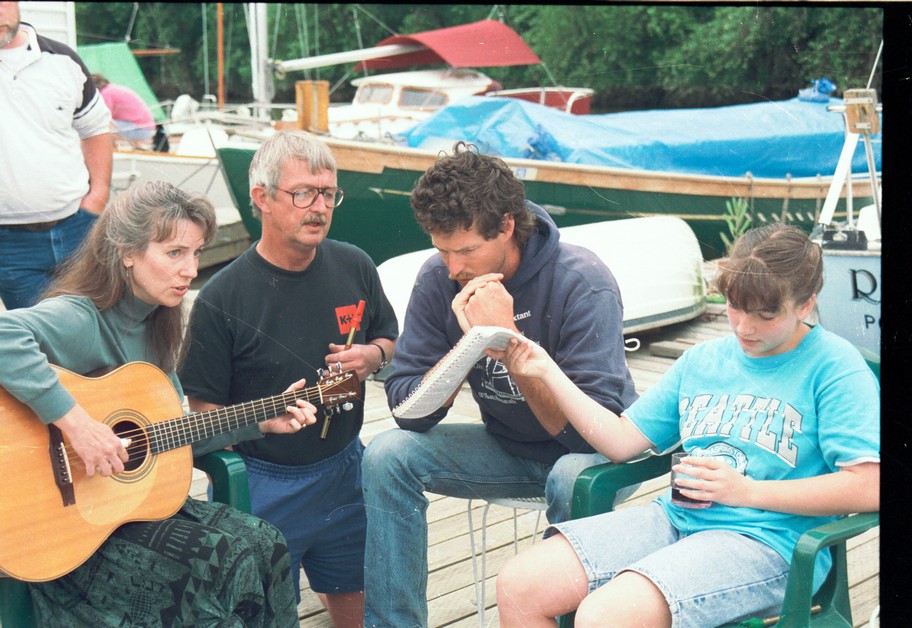
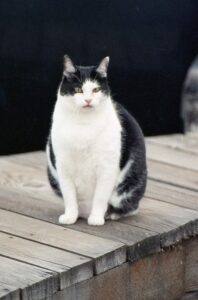
My friend and moorage neighbor Terry bought a new-to-him 33’ Ranger. Of course, anyone who knows terry and his partner in life, Dorthea, understands the need for a little bigger boat. Terry is about 6’4’ and weighs about (okay, Terry I’m guessing) 290 lbs soaking wet and Dee, can look down on my follicles impaired head (there is no way in my lifetime that I’ll try to guess a lady’s weight). But their real dilemma with the old 24’ Columbia sailboat, is their than adequately fed cat Harriet, who takes up more than her allotted area. Keep in mind that they’ve lived on it for at least the four years that I’ve known them.
Terry was understandably very excited when he told me of his latest purchase and proceeded to tell me how he was going to have it trucked up to Portland in the next two weeks. I then reminded him that we were, after all sailors, and how dare he even suggest that we put his new boat onto a truck, when we could sail it up from Newport to Astoria on one weekend, then on to Scappoose the next? Besides that, he could save enough money to buy some new toys for the boat.
Terry and I’ve both been sailing and delivering boats across the Columbia Bar and along the coast for a number of years, so needless to say, we both felt quite confident in our abilities, given the weather forecast for the weekend. (Waves to be around 6’to 8’ and seas 2’ to 3’. Wind SW 15 changing to W 15 to 20 later Saturday.) There didn’t appear to be any big problem with the weather, even though we would be bringing the boat up late in October (mistake #1, stay off the Pacific Ocean after second week in October).
Terry had gone down Wednesday to have the boat pulled and the bottom worked on. I was to meet him Friday night, but Friday turned out to be a day from hell at work. I had to get up at 0330 and take a load of lumber (I drove a semi-truck for money, and sail for a living) to Pendleton and when I got back to Beaverton, I had to take another load to Gresham. I didn’t get back to the distribution center until after 1830 hours. Needless to say, I was very, very tired. Dee and my friend Robin drove me to Newport to meet Terry and we all stayed up quite late (0030), (mistake #2, don’t start a trip tired).
After Robin and Dee left for Portland Saturday morning, Terry and I started stowing food, equipment, emergency life raft, tying down extra fuel cans, and generally getting the boat ready to sail. This part was achieved easily due to lessons learned from years of past mistakes (one thing right). By the time we finished, it was almost 0900 hours. We checked the weather forecast again and found it to be a little on the decline, but not beyond what we felt comfortable with. The only difficulty we foresaw was the fog, with visibility of about 200’ at the Embarcadero Marina.
The forecast for the Columbia bar mentioned no problem with the fog. Even though we had no radar aboard (mistake #3, best not to adventure out in the Pacific without radar), we felt confident in our abilities in using our DR (dead reckoning) depth contours on the chart, Terry’s brand new, still in the box GPS (mistake #4, always calibrate a GPS while on the dock) and the compass to get us out of the fog, across the Columbia River Bar and into Astoria. We knew the wind would be picking up to 15 to 20 mph, which should help dissipate the fog in a couple of hours anyway (mistake #5, don’t take weather reports for granted, they change quickly).
At 0900 hrs. we began to feel the pinch of time slipping away from us to get the boat north, as we both had to be at work Monday (mistake #6, sailing under a timeline). We still hadn’t taken the time to eat a good breakfast. Instead I had coffee and a power bar that had all kinds of nuts, grain, fruit and sweetener, you basic healthy food for the Daily Grind in Portland and Terry had his proverbial cup of coffee and another kind of junk food with lots of grease (mistake #7, be careful of what you eat, it might not taste as good coming back up).
I laid out the course to Astoria as we were going down the channel (mistake #8, always best to chart the course while tied to the dock and you have plenty of time to do it right). But being the wise old sailors who’ve “been there, done that” before, we thought our time preparing the sailboat for the trip, was better spent.
In the meantime, Terry had been trying to make the GPS work but was getting incorrect readings. Our course would be 270 NW for at least an hour before our turn to the NW, so we figured Terry (our electronics expert) could get it working while we were underway. Worse case after the morning fog lifted and with our dead reckoning, we wouldn’t have any big problem. Neither one of us had even thought to initialize the GPS while on land (mistake #9-refer to mistakes ‘4 and 8’) which is the acceptable procedure, as we found to be the case when we finally (God forbid) decided to read the directions.
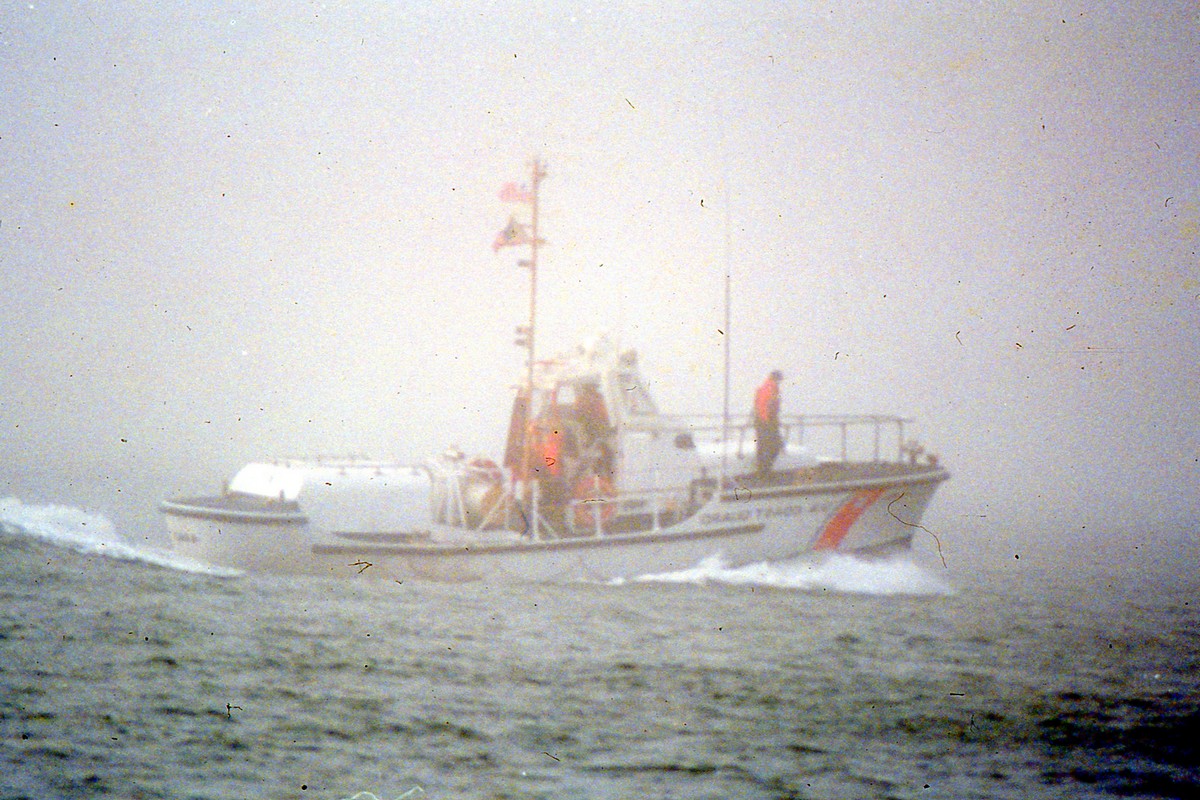
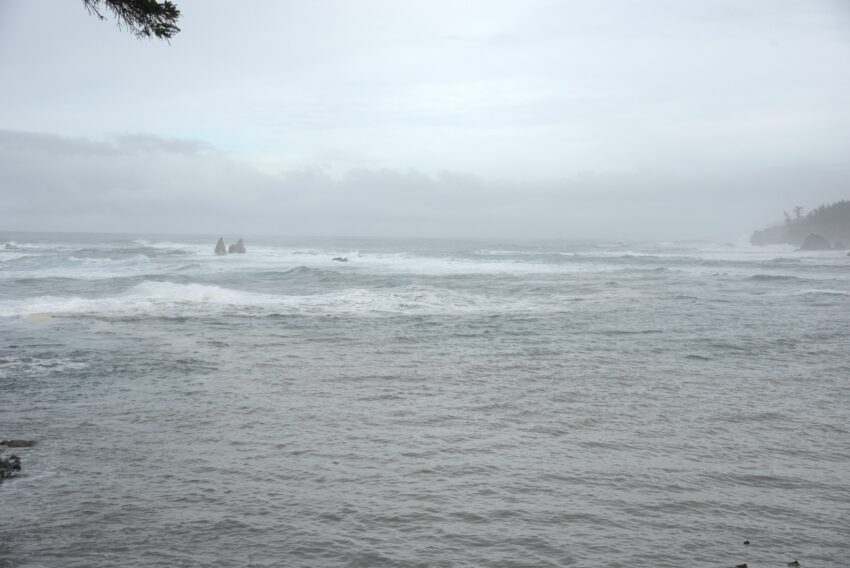
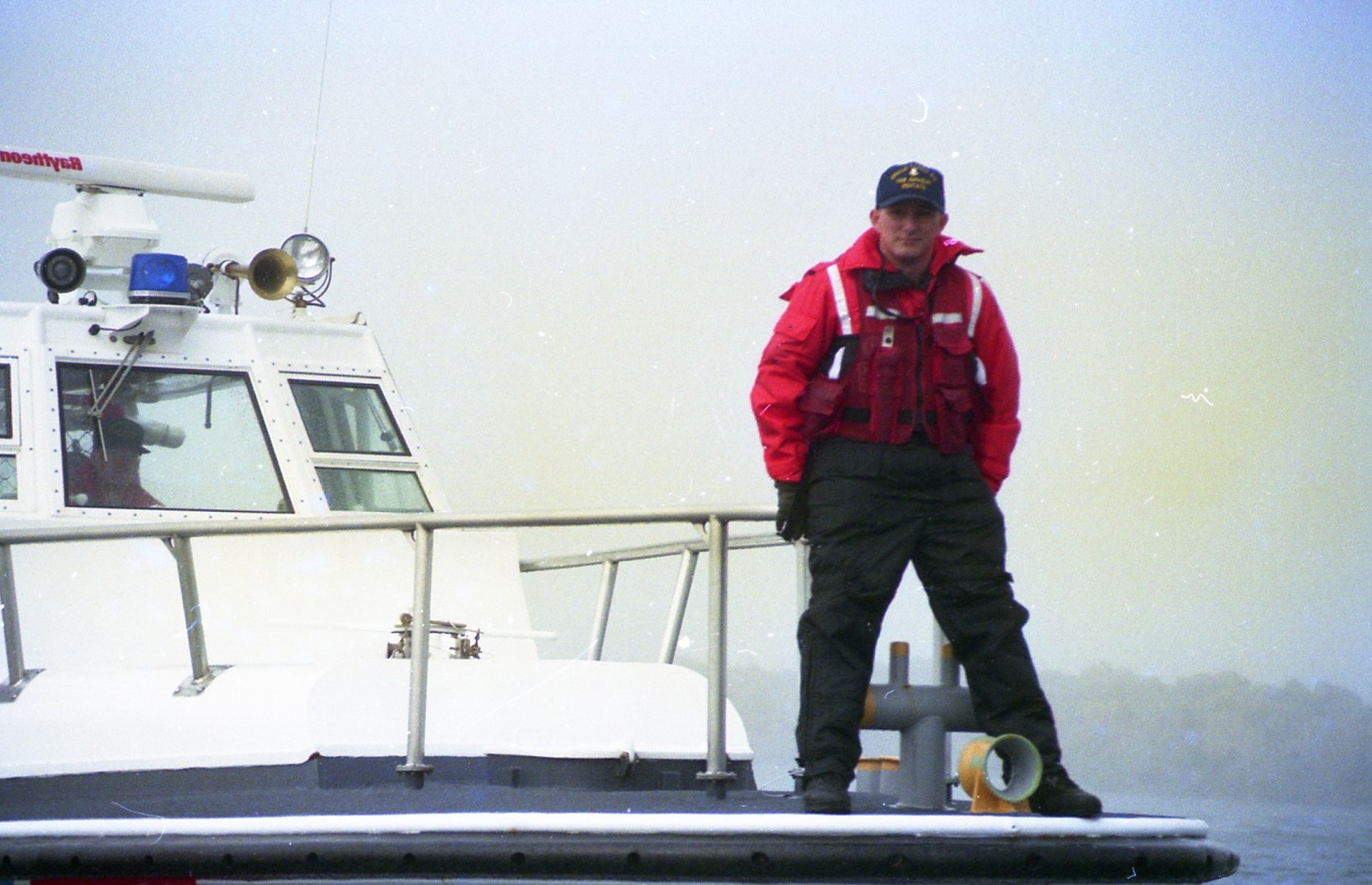
Waiting for us and other seamen leaving the mouth of the Yaquina Bay Jety was the crew of Yaquina Bay’s Coast Guard boat 44407. We talked with the skipper across bows and were given the current conditions, as he knew them. It was eerie, but at the same time reassuring to look back through the fog as we parted to see the 44407 disappear into the mist. As the 44’ totality disappeared into the fog, the skipper who was hanging onto the bowsprit in his bright orange Mustang suit, for a brief moment appeared as if he were suspended in the fog with no ship beneath him.
As we cleared the bar and left the Coast Guard behind, the reality of the sea began to overtake our thinking and energies. The swells were higher and closer together than we had expected, kicking up fairly good wind waves, which all came from the NW. Within an hour the wind kicked up from about 20MPH to about 35. We raised a reefed main in order to help stabilize the boat, then a short time later fought to reef it more as the wind picked up above the 35MPH mark and headed for 45.
Normally, or so we thought, the fog should have lifted, especially in that wind. But that was not the case that day. We could see no further than three boat lengths in any direction. Neither of us had ever been in a situation where there was that kind of wind and fog. We still felt that we would run out of it by the time we were up to Tillamook, so we pushed on.
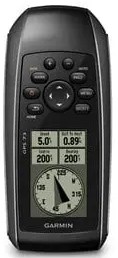
Terry finally got the GPS working, well kind of. The latitude seemed to be telling us where we should be or thought we were, but the longitude has us sitting somewhere ashore, where we both were pretty sure we didn’t want to be, and without ample water beneath the keel.
There was a cost to getting the GPS partly working, which Terry soon paid for by turning a shade of green that approached the color of the water surrounding us. It wasn’t very long after that he started to expel the coffee and junk food of the morning. All I could say with the piety of one who has never quite gotten that seasick (mistake #10, pride goes before the fall), was “for God’s sake Terry, at least go off the stern”, which he was able to do with a show of a lot of finesse, of which any seasoned sailor would have been proud.
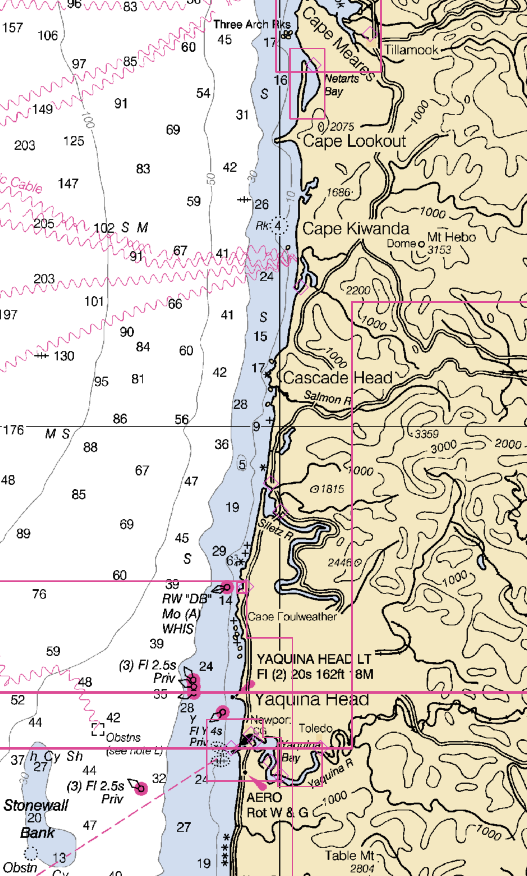
We continued to NW for another couple of hours making sure land stayed well on our starboard side. When Terry felt good enough to take the helm, I went below (mistake #11, better to stay topside in rough seas), to log our position. I attempted to get a reading off the GPS and plot it on the chart. But the GPS still was giving me a reading that I really didn’t trust, so still in the fog with no way to get a fix from land, I was left with only depth contour lines and DR for our fix.
All of a sudden, I had the strangest urge to empty the contents of my stomach, which I did and I couldn’t even reach the deck. Instead, I chose the closest receptacle I could find, the galley sink. I must admit Terry was far more graceful and one must take one’s hat off to greatness!
I escaped topside where I told Terry to hold our course while I took a little nap (I saw no sense in letting him worry about me being sick and leaving a little mess below, seeing he had enough to worry about with his own ill feelings).
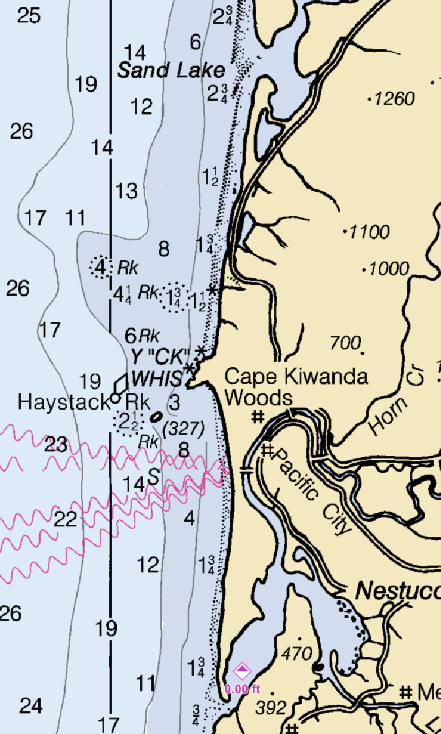
In about two hours Terry woke me up with “Jim, what’s that rock on our starboard side?” pointing to a large rock looming out of the fog, which appeared to be bigger than either one of wanted to become acquainted with. I quickly suggested that he turn to 270-degrees, to which replied with more than a little dignity, that he was already doing as fast as possible! According to the dubious GPS, it should have been Otter Rock, however we both felt it would not be a good idea to visit it any closer to make sure.
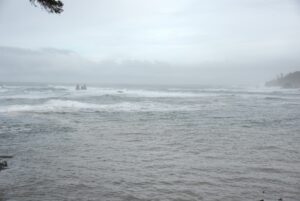
After a lot of discussion and swallowing our pride, we both felt that it was time to turn back to Newport (finally a good decision for a change, as with flying, the safest course when in trouble is a 180-degree turn) and admit to ourselves that this weekend was not the ideal time to deliver the boat. There is a time when ego has to be set aside to let logic and safety take over, now was that time. The trip back took much less time as we were almost surfing with the wind behind us and the current pushing us along at about 6-7 knots. What had been a sheer struggle for six hours against the wind and seas that seemed to come at us from three (okay, maybe only two) directions, became an adrenaline pumping roller coaster ride for the next two and a half hours.
We both began to feel a little better (though not much) and looked for the outer buoy at the entrance to Yaquina Bay. The fog had gotten worse (visibility down to 50’ to 75’) since we’d cleared the bar earlier in the morning, with wind the West-NW wind still blowing from 30 to 40 MPH. We looked, shut down the engine to listen for the entrance buoy, but alas, still couldn’t find it, even though we knew we had to be damn close. We both became alarmed when the depth finder began to flash in the low fifties! This couldn’t be good. We were too close to shore and knew it. Our biggest problem was that we still didn’t know within a quarter of a mile where we were. Pride be dammed! It seemed that if there ever was a good time to call in the Calvary, it was now.
I made a call on channel 24 (of course pride kept me from admitting that this was an emergency) instead of VHF Channel 16 the emergency channel, and asked for a Coastie who I knew very well, and asked him to go to another channel ( I really didn’t want to broadcast my stupidity to the world), I explained the situation and asked for our present position. When I told him what I thought it was, he said with concern in his voice “turn NOW to 270-degrees and put your life jackets on, turn back to channel 24 and we’ll be right there!” I confirmed that we already had turned to 270 degrees, and our life jackets were indeed on and had been on most of the day.
We already had noticed the depth beginning to get deeper (okay, the damn thing did work right). I took over the wheel from Terry and as I became occupied with my surroundings (up on the crest and wallowing around the bottom) and the path of the boat. I began to feel better with my mind occupied but I couldn’t say the same about Terry lying on the settee looking different shades of green.
In about 12 minutes the radio cracked, “Panacea, give me a long count”, so I counted down from 10. About five minutes later the radio squawked again, “give me a short count”, of course I replied. All my energy was on steering the boat up and down the waves and listening for the voice of the Coastie. Within about three minutes the Coastie came back on for another short count. Terry looked up with his green face and said “Jim, look behind us”.
As I turned around and looked, riding the crest of a wave came the most welcome sight that I can ever remember seeing. Coming out of the fog, hanging onto the bowsprit of the Coast Guard motor lifeboat 44407, dressed in his bright orange mustang suit was Petty Officer Ty Farrell, my SON, skipper of the 44407!
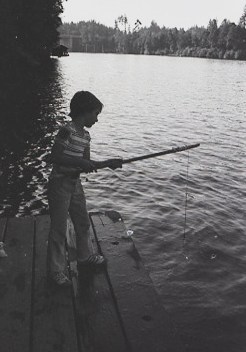
Yep, that was the child that I had jumped into the water to prevent him from drowning after he fell off an air mattress into the middle of Canyon Meadows Lake in Grant County, Oregon when he was five years old. That was the same kid who was out in stormy weather saving his own father from his own stupidity! Needless to say, the sweetest words to come over the radio were my son’s saying, “follow us in Dad”.
As it turned out we were just south of the south jetty. We had missed the outer buoy by less than 150’ and still couldn’t see or hear it. We followed Ty and his boat into the channel where smoother water and smoother stomachs prevailed.
As luck would have it (rather, good sense and the US Coast Guard would have it) the only cost, other than injured pride and one hell of a reality check, was Terry and I sprung for a keg to help Ty and his crew to celebrate the new year.
Water Nazis? No way in hell. Not where my son and his shipmates are concerned. Not after each and every time they cross the bars and head into stormy weather to help another one of us who through poor planning, over confidence, just plain stupidity, or even bad luck, get ourselves into trouble, they’re there. They will come to our rescue no matter how bad the weather is or danger to themselves. The next time they want to inspect or board your boat, instead of feeling imposed upon, look at it as you have something to learn. Believe me, what they find could save your life or, at the very least, a lot of embarrassment.
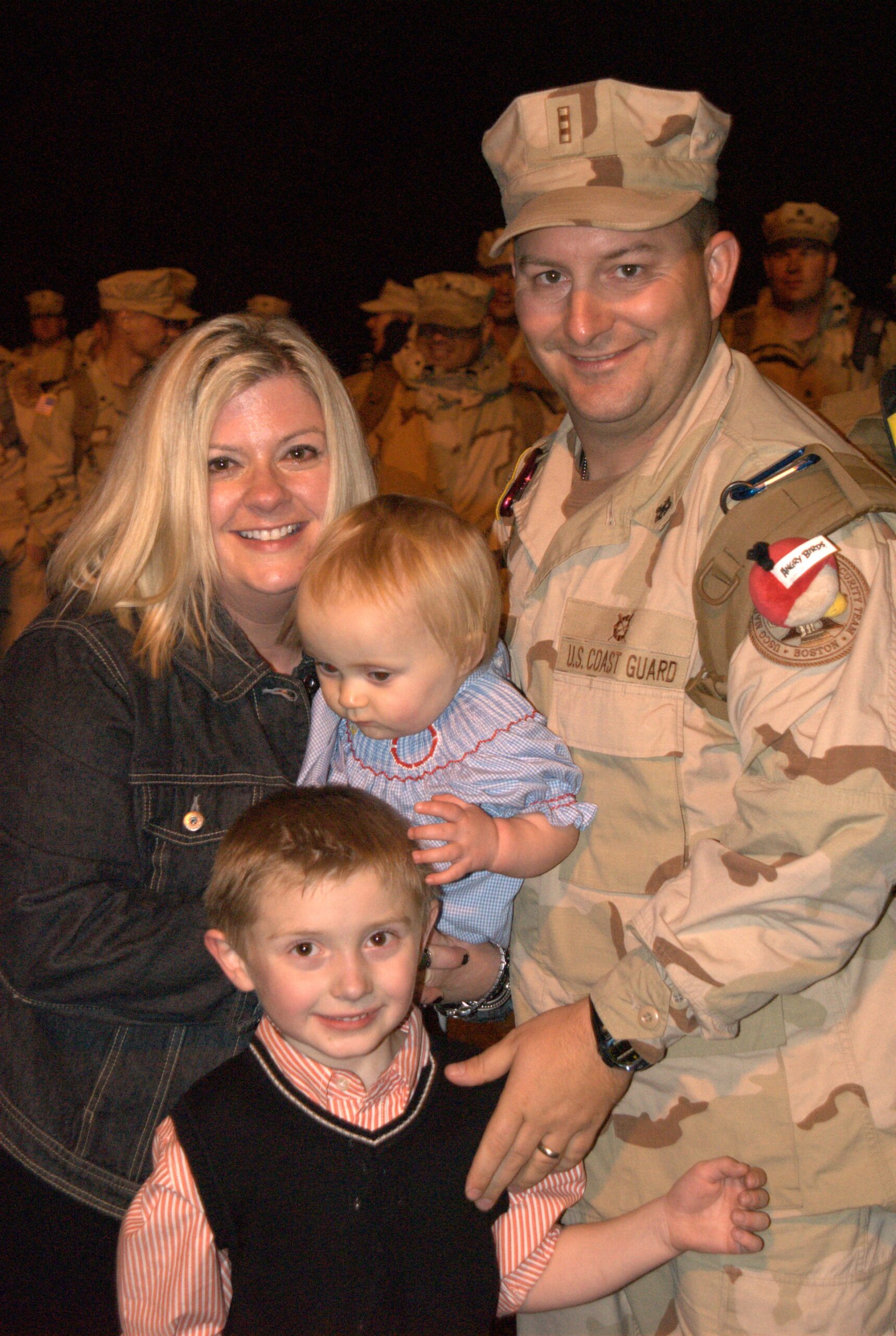
Ed: My son Ty, retired as a warrant officer from the Coast Guard, and now lives with his wife and two kids in Texas. I live in awe of the lives that he has saved during his 22 years with the Coast Guard. My thanks to him and those who served with him and those who still serve saving the lives of those of us who venture out to sea.